
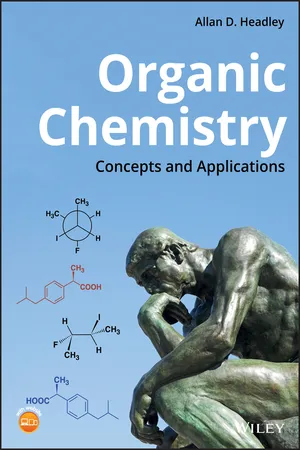
Organic molecules form the basis of life, and understanding how they work is essential for students studying chemistry, biology, medicine, or environmental sciences. The fundamentals of organic chemistry help explain everything from energy production in cells to the behavior of industrial materials. This post explores the key principles of organic molecules and explains the essential concepts that every student must learn to excel in organic chemistry.

Organic molecules are primarily composed of carbon, hydrogen, oxygen, and nitrogen, but can also include sulfur, phosphorus, and halogens. Carbon’s ability to form strong covalent bonds allows it to create a wide range of molecular structures, from simple methane to complex biomolecules. This bonding flexibility makes organic chemistry one of the most diverse fields in science.
One of the first concepts students encounter is the idea of molecular structure. Organic molecules come in various shapes, including chains, branched chains, and rings. The structure influences reactivity, polarity, phase, and overall stability. For example, linear alkanes behave differently from branched ones because branching affects boiling points and molecular behavior.
Functional groups are essential in understanding organic molecules. These groups are clusters of atoms that determine chemical reactivity. Alcohols contain an OH group, making them polar and soluble in water. Aldehydes and ketones both contain carbonyl groups, but their placement changes how they react. Amines behave as bases because of the nitrogen atom, while carboxylic acids release hydrogen ions and act as acids. Mastering functional groups allows students to predict reactions with ease.
Isomerism adds complexity to organic chemistry. Constitutional isomers differ in connectivity, whereas stereoisomers differ in spatial arrangement. Stereochemistry plays a crucial role in biological systems. For example, one enantiomer of a drug may be therapeutic, while the other is harmful. Learning to differentiate between R and S configurations or cis and trans forms is essential for future chemists and pharmacists.
Another important concept is hybridization. Carbon atoms can be sp3, sp2, or sp hybridized, depending on the bonding environment. Hybridization affects molecular geometry, bond angles, and reactivity. For instance, sp2 hybridized carbons in alkenes create planar structures and allow addition reactions, while sp hybridized carbons in alkynes form linear shapes with high bond energy.
Organic reactions are central to understanding how molecules transform. Students learn about nucleophiles — species that donate electron pairs — and electrophiles — species that accept them. Reaction mechanisms describe the steps of electron movement. Understanding mechanisms enables prediction of products and helps explain why certain pathways dominate.
Hydrocarbons serve as the foundation. Alkanes undergo substitution and combustion, alkenes participate in addition reactions, and alkynes form powerful carbon-carbon bonds useful in synthesis. Aromatic compounds like benzene show resonance, giving them unusual stability. These reactions and patterns help students explore more advanced topics such as aromatic substitution, polymer formation, and biochemical synthesis pathways.
Organic molecules are also crucial in biological systems. Glucose is an organic molecule that powers cellular respiration. Lipids form cell membranes, while proteins carry out metabolic activities. DNA and RNA, the molecules of heredity, rely on organic chemical principles such as hydrogen bonding and functional group interactions. Understanding the chemistry behind these molecules helps students connect organic chemistry with life sciences.
Real-world applications make organic chemistry even more relevant. Organic molecules form the basis of pharmaceuticals, plastics, pesticides, dyes, fuels, and countless industrial materials. Chemists design synthetic routes to create new compounds with specific functions. Whether it is creating biodegradable plastics or engineering potent medicines, organic chemistry drives innovation across sectors.

Learning organic chemistry requires patience and consistent practice. Visualization tools, reaction map charts, and molecular modeling can help beginners understand complex structures and reaction pathways. Many students find that once they grasp the fundamentals, advanced concepts become far easier to understand.
In conclusion, studying organic molecules reveals how life functions at a molecular level and how industries create materials that shape modern society. By mastering structure, functional groups, isomerism, hybridization, and reaction mechanisms, students build the foundation needed to explore more advanced areas of chemistry. Understanding these principles transforms organic chemistry from a challenging subject into an exciting and rewarding field of study.

